


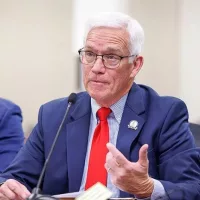
FRANKFORT (Kentucky Today) – In a bid to lessen Kentucky’s medical doctor shortage, a bill that passed the Senate Health Services Committee on Wednesday would eliminate a duplicative residency requirement for international doctors to practice in the state.
Senate Bill 137’s sponsor, Health Services Committee Chair Sen. Stephen Meredith, R-Leitchfield, said the shortage is pronounced in rural communities where 42 percent of Kentuckians live, but only 17 percent of the state’s primary care physicians reside.
“What we’re attempting to do is address a problem that is serious and will become more serious in the future. It’s projected by 2030 that we’re going to have a shortage of almost 3,000 physicians in the state of Kentucky,” he said.
Meredith noted the bill isn’t a total solution to the problem, but a big step in the right direction. He said the state’s Medicaid spending has grown from $10 billion in 2017 to more than $20 billion today. A top priority is getting enough practitioners so that people have access to care, he said.
Under SB 137, doctors would have to complete English proficiency requirements, be graduates of a foreign medical school and have completed a foreign residency program or alternatively, graduate from a U.S. medical school and have completed a foreign residency program.
They must also have at least five years of work experience as a physician fully licensed in their country of licensing and be in good standing with the licensing authority of that country, he said.
Reynolds said candidates need to be certified by the Educational Commission for Foreign Medical Graduates, pass exams required by the Kentucky board and have an employment offer from a sponsor.
Sen. Lindsey Tichenor, R-Smithfield, voted against the measure, saying she has concerns about the quality of training some physicians might have. She also said there’s the possibility of false licenses.
“I have some concerns with this bill based on a perspective that I bring. I lived for four years in a third world developing country,” she said.
She said a national from the foreign country where she lived performed dental work on her, and she subsequently needed to have surgery in the United States.
The bill now heads to the full Senate.


