


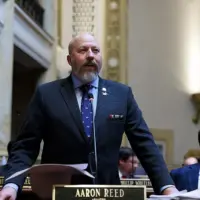
FRANKFORT (Kentucky Today) – State Sen. Aaron Reed, R-Shelbyville, filed legislation on Tuesday to return the issuance of some driver’s license services to counties, instead of requiring use of a regional licensing office.
The measure, designated as Senate Bill 7, indicating it is a priority of the Republican super majority in the Senate, would return driver’s license renewal and duplicate services to local county offices in those counties without a regional licensing office, including the circuit clerk, county clerk, county sheriff or county judge/executive, through agreements with the Kentucky Transportation Cabinet (KYTC).
The bill responds to growing public frustration with long wait times, limited appointment availability and recent investigative reporting that has raised serious concerns about how Kentucky’s driver licensing system is operating under the state executive branch’s control.
“Across Kentucky, people are fed up with long waits for basic services,” Reed said. “When state government bureaucracy creates barriers instead of access, it is clear the system is not working. SB 7 offers a workable path to return license renewal services to trusted and eligible local offices, so Kentuckians are not forced to drive hours to a regional office in another county.”
Reed noted that recent investigative reporting, which raised concerns about the improper issuance of driver’s licenses, was among the factors that prompted him to craft and file the proposal.
SB 7 establishes a system requiring KYTC to enter into agreements with eligible local officials to issue renewal and duplicate driver’s licenses and personal identification cards in counties without a regional licensing office. Under the bill, KYTC is responsible for purchasing and installing the necessary equipment.
Local officials may issue driver’s license renewals and duplicates only to residents of their county, except where an interlocal agreement allows participating counties to serve each other’s residents. Counties may collaborate through interlocal agreements to share equipment, personnel, and facilities. In counties where no local official chooses to issue renewals, the county judge/executive may enter into an interlocal agreement with another county to provide services for their constituents.
Upon the bill’s filing Tuesday afternoon, it carried the backing of 28 Senate co-sponsors. It has been assigned to the Senate Transportation Committee.


